

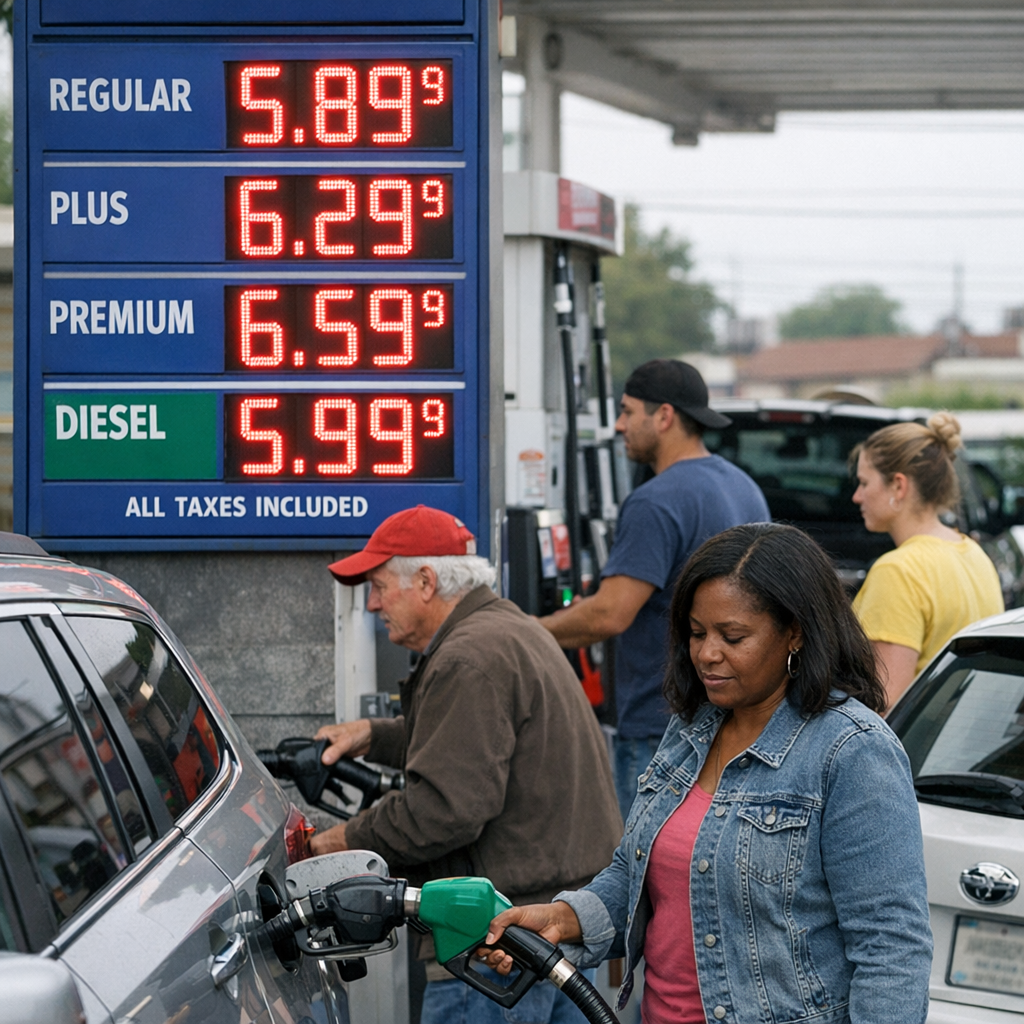
As the nation grapples with economic challenges, many Americans are expressing concern over rising inflation and escalating energy costs. Recent data indicates a significant increase in consumer prices, with inflation reaching 3.8% in April, the highest in three years. This surge is largely attributed to the ongoing military conflict with Iran, which began in February and led to the closure of the Strait of Hormuz, a critical passage for global oil shipments.
The conflict has caused a sharp rise in energy prices, with national average gas prices exceeding $4.50 per gallon, and some states experiencing prices above $5. This increase has placed additional financial strain on households, as 77% of respondents in a recent CBS News/YouGov poll reported that their incomes are not keeping pace with rising prices. The same poll revealed that 70% of Americans feel “angry” or “frustrated” about the current economic situation, highlighting widespread dissatisfaction.
In response to these challenges, the Federal Reserve has maintained its benchmark interest rate at 3.6%, with plans to potentially lower it to 3.4% if economic conditions worsen. However, the International Monetary Fund has cautioned that the growing federal budget deficit poses a stability risk, emphasizing the need for balanced fiscal policies.
Despite these hurdles, there are signs of resilience in the economy. The housing market has seen increased activity, with a bipartisan housing bill passing the House of Representatives by a 396-13 vote, aiming to address the nation’s housing shortage. Additionally, sectors like healthcare continue to experience job growth, offering some optimism amid the broader economic uncertainty.
As the situation evolves, it is crucial for policymakers and citizens alike to stay informed and proactive in addressing these economic challenges to ensure long-term stability and growth.