

By Sophia Nguyen
Big Construction & Revitalization in Multiple Neighborhoods
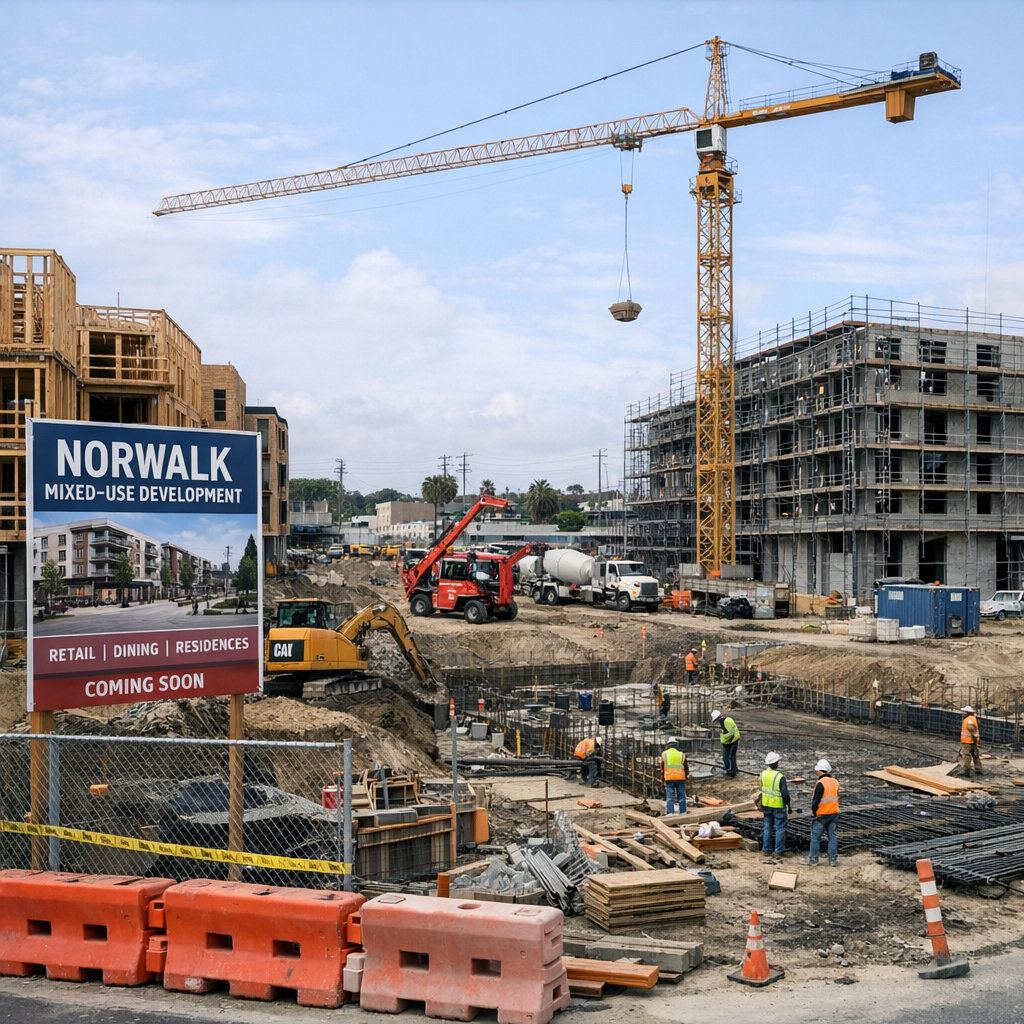
Norwalk is in the midst of several transformative mixed-use and housing developments. Among them is The Walk, a 375-unit project downtown aiming to foster more walkable community life with connected public spaces, modular residential building, and street-level retail. The 26 Monroe transit-oriented project, led by Norwalk Housing Authority and National Housing Trust, plans a mix of affordable and market-rate units along with commercial amenities, with groundbreaking expected in late 2028 or early 2029.
Also underway is the redevelopment of Mathews Park, updates to the South Norwalk Station area, and significant streetscape improvements in the West Avenue/Pinnacle site area—all supported by grants and city investment. These aim to promote walkability, mixed land use, and better connectivity to transit.
Affordable Housing: Rising Supply, Still Unmet Demand
Projects like Oak Grove, which will offer 69 affordable units and a Learning Center, and the senior housing development planned for 79 South Main Street are expected to help meet growing housing needs. The expansion includes exploring public housing conversions and mixed-income models to ensure access for lower income households.
Community feedback from listening forums revealed ongoing concern that even as new housing goes up, rents and commercial lease rates—particularly in South Norwalk (SoNo)—are making it hard for small businesses and long-time residents to stay. Grocery access, essential services, and affordable storefronts were cited as needs that aren’t always addressed by new, market-driven developments.
Infrastructure, Accountability & Neighborhood Quality
Residents in various neighborhoods have voiced frustrations with project oversight and visible disruptions. Concerns were raised about poor contractor accountability, delays, and temporarily obscured access routes. There is also interest in burying power lines during reconstruction, more frequent and visible paving work, and overall better coordination among city departments and contractors.
City officials have acknowledged these concerns in planning forums, and new tools like an interactive GIS map to track ongoing construction projects are helping people stay aware of road closures and responsible agencies. The Planning & Zoning Department has highlighted its role in guiding growth, reviewing major developments, and enforcing regulations.
What This Means for Norwalk Residents
- Expect neighborhood shifts—new residential and commercial spaces will change traffic, density, and street activity in SoNo, East Norwalk, downtown, and along transit hubs.
- Affordability remains a concern: even with new units, making sure housing and small business space remain within reach is a growing priority.
- Resident engagement matters. Forums show that visible infrastructure improvements and clear communication from city departments are crucial for trust.
Norwalk is balancing growth, community character, and infrastructure challenges. As these projects move forward, the choices will shape which parts of the city benefit, and how residents experience the changes every day.