

By Ava Rodriguez
In Norwalk, we’re not always headline makers when it comes to tech—but between local startups growing fast and AI creeping deeper into daily life, the changes are real, visible, and often unnoticed until they make a difference.
Homegrown Innovation: Startups Anchoring Norwalk’s Tech Identity
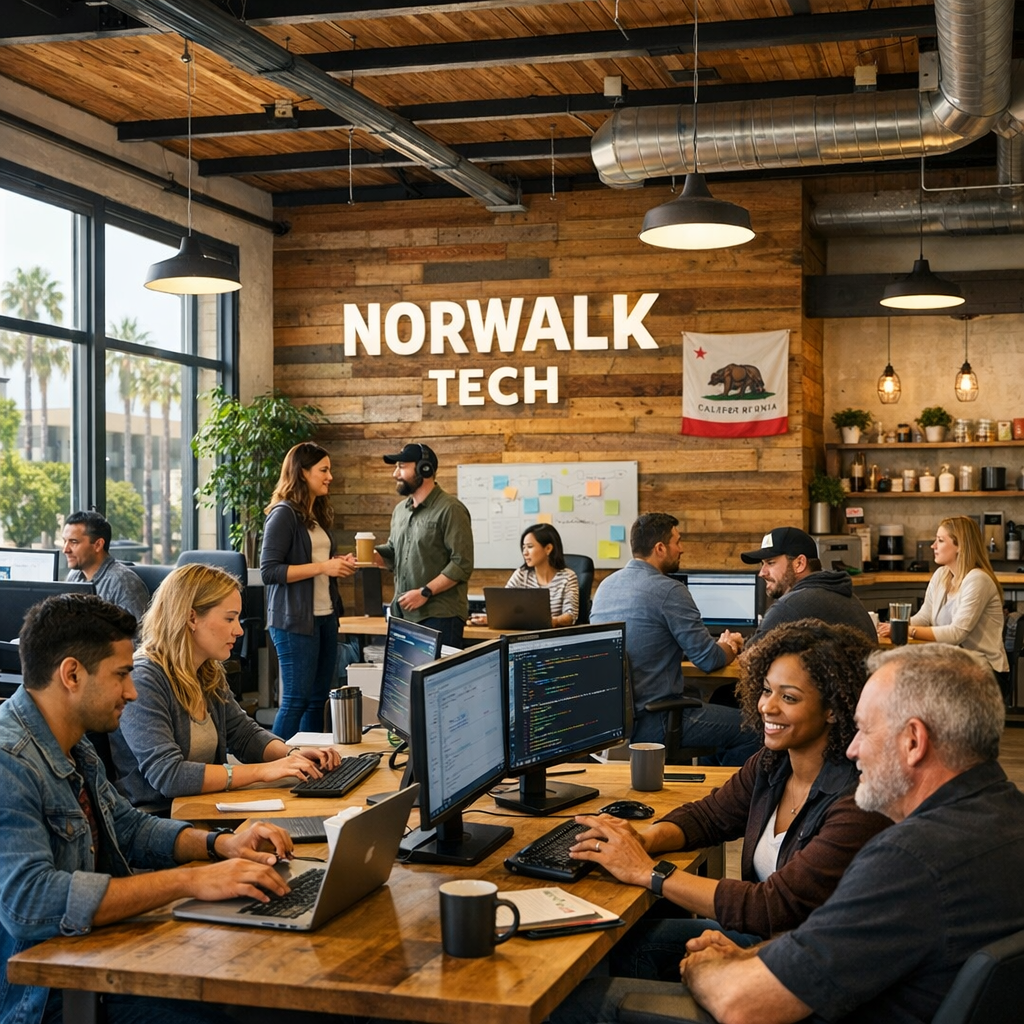
Norwalk’s startup ecosystem has been picking up steam. Companies like Datto—founded here—continue evolving far beyond their early days, serving international clients while keeping roots in the community. Meanwhile, LegalTech firm LinkSquares, financial operations group LogicSource, and the travel brand Priceline (part of Booking Holdings) are among Norwalk firms developing tools that change how business gets done. These companies rely on support from things like state R&D tax credits, venture funds aimed at AI and quantum tech, and city grant programs designed to spur local entrepreneurship.
Everyday AI: More Common Than You Think
Too often, when you hear “AI,” you imagine something futuristic. But chances are you use it daily without realizing it. Voice assistants on your phone, smart recommendations on your streaming services, navigation apps guiding your drive home—all powered by AI quietly running in the background. Surveys show almost all Americans say they use weather apps, social media, streaming, or shopping services regularly—many of those rely on AI features. One study found over half of people said they’ve used AI personally, even if they didn’t always recognize it.
Work is Getting Smarter, Faster
In Norwalk and beyond, AI is moving into the workplace in concrete ways. Employees are using AI tools to summarize documents, prioritize inboxes, generate draft content, or extract data from contracts. Some local startups build tools specifically for these tasks. Nationally, usage is growing: up to half of U.S. workers now use AI at work, and many report productivity benefits.
Privacy, Trust, and the Experience Gap
More AI brings more questions. People often feel cautiously optimistic: they like the convenience and possibilities, but worry about accuracy, misuse, or letting autonomous systems make decisions without oversight. A body of research shows trust lags behind adoption. In small businesses, in higher-education sectors, among older adults—usage tends to be lower and skepticism higher. Deferred questions often center around who controls the data behind the services we use.
Gadgets That Blend Life and Tech
Gadget-makers are leaning hard into portability, seamless design, and AI features that anticipate users’ needs. Smart home sensors, wearables that track wellness, devices that enhance content creation or video calls—all aim to help more and make us think less. Even non-tech startups here often adopt these tools earlier than people might expect.
What This Means for Norwalk Residents
- You might find that your habits change without realizing: email responses suggested by AI, errands routed by apps, even heating or lighting patterns adjusted automatically.
- Local startups could help make services or software tailored to Norwalk’s needs—everything from disaster recovery to legal help.
- We ought to ask questions about privacy, data sharing, and how responsible businesses using AI are held accountable.
- If you’re interested, there’s support: local grants, state funding, and flexible workspace options are all expanding here.
Norwalk may not always feel like Silicon Valley—but it is changing, quietly, thanks to convergence of AI, startups, and gadgets that meet us wherever we are. And that change is reshaping our routines, our work, and our city.