

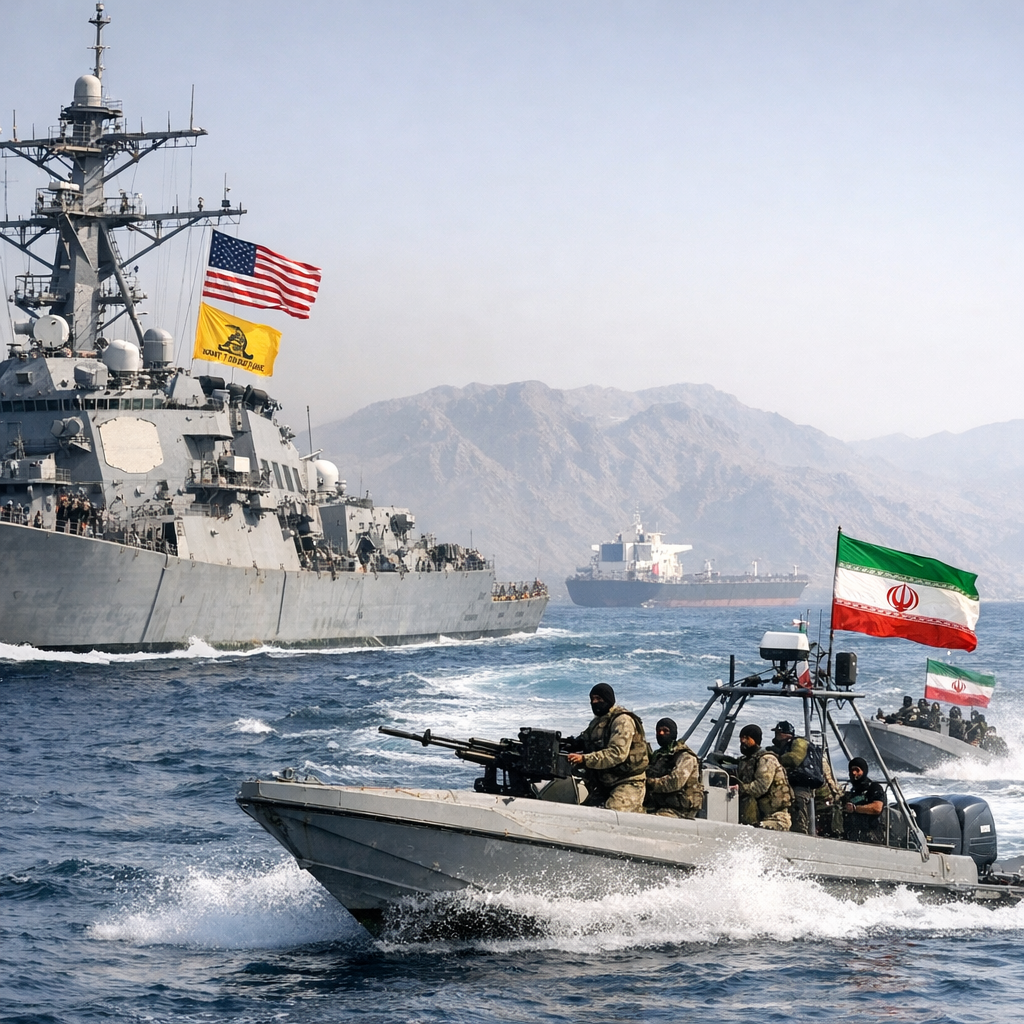
Recent developments in the Strait of Hormuz have once again brought U.S.-Iran relations into the global spotlight. Reports indicate that both nations have engaged in military actions over this strategic waterway, raising concerns about regional stability and international peace prospects.
Background of the Conflict
The Strait of Hormuz is a vital passage for global oil shipments, making it a focal point in geopolitical tensions. Historically, control over this strait has been a contentious issue, with both the U.S. and Iran asserting their interests.
Recent Escalations
In early May, reports emerged of a military clash between U.S. and Iranian forces in the Strait of Hormuz. This incident marked the first deadly encounter since a ceasefire was established in April. Analysts suggest that the U.S. aims to pressure Iran into compromising on its positions, while Iran views control over the strait as a strategic advantage. These sporadic incidents highlight the deep mistrust between the two nations, complicating efforts toward lasting peace.
Implications for Global Stability
The ongoing tensions have broader implications. The Strait of Hormuz is crucial for global energy supplies, and any disruption can lead to economic repercussions worldwide. Moreover, the conflict underscores the challenges in U.S.-Iran relations, with both nations seeking leverage in negotiations. Observers warn that without mutual trust and compromise, the region may face prolonged instability.
Conclusion
As the situation unfolds, it is essential for the international community to monitor developments closely. Diplomatic efforts should be prioritized to prevent further escalation and to work toward a peaceful resolution that ensures the security of the Strait of Hormuz and the broader region.